Monday, February 4, 2019

The Robotech Novels by Jack McKinney

Robotech may have started in television animation, but what really made me a fan was the series of novels written by "Jack McKinney" in the late 1980s.
Robotech is pure space opera which is heavy on a "love conquers all" theme. There's some lip service paid to how people end up out in space or flying planes that turn into giant robots, but the real reason is effectively "magic." Magic in the form of "protoculture" in the case of Robotech, a substance that does strange things to people's minds as well as enabling crazy technological advances. Perhaps "protoculture" even has an awareness and agenda of its own. I've labeled this post science fiction because that's how Robotech is categorized when you go looking for the books or videos, but don't be fooled - it's an epic fantasy, with all the romance/tragedy/adventure that implies.

That's not to say, however, that Robotech uses mystical "protoculture" solely to manufacture happy endings. The initial alien attack against humanity doesn't end with humans beating back the assault. Not all the star-crossed lovers get a perfect happy ending. Earth is in pretty bad shape, humans and aliens have to learn to live together, and later on the planet ends up conquered by yet another alien race. People die, lots of them, including a few that the reader knows pretty well. By the time the series wraps up with The End of the Circle there has been plenty of good news, but the journey is certainly not all roses and rainbows.

The Robotech novels are roughly divided into four sections: the Macross Saga, the Sentinels, the war with the Robotech Masters, and the Invid Invasion. Three of those correspond to the three seasons of the television series; the fourth, the Sentinels, was going to be a sequel television series but never made it to air. Then you have three novels that fill in gaps between the four major parts, and The End of the Circle that takes the story beyond the various TV series timelines to wrap it all up. (That last is specific to the novels, since the animation went another way with Robotech: The Shadow Chronicles. I much prefer the story of the novels to the animation.) If that sounds like a lot of reading, you're right: 21 books in all. Though many are fairly short as novels go, that's still a whole lot of words. A reader has to really enjoy the universe and characters to make it all the way through that kind of verbiage.

Those three "fill in the gaps" novels were new to me, as they were written after the rest. By the time those three came out, I'd already finished the rest of the series, and at the time I never even looked for additions. Of course, that was 25 years ago, so my memory of the details is hazy at best. I'd been thinking about re-reading the series, curious as to whether I would still enjoy it a couple of decades later. When I saw the books were available on Amazon for the Kindle, that gave me the excuse I was looking for to read the whole series in chronological order. (Well, all but one were e-books. For arcane reasons of publication rights, The Masters' Gambit is only available in dead-tree format, and out of print to boot. Had to order that one from a used book store, and it cost nearly as much as the entire rest of the series combined!)

Those quotation marks around the author's name up above are there because there was no actual Jack McKinney - the name is a pseudonym used by American authors James Luceno and Brian Daley. I had no idea of this when I first read the books, of course. As a sci-fi obsessed teenager, I didn't much care where the stories came from!

Novelization of television is a tricky thing. You have to describe in words what people simply absorb by watching, while still capturing whatever tension and emotion the sound and visuals evoke. You also get the opportunity to expand on things that didn't make it on screen for whatever reason (often time or budget constraints). And you need to find a way to explain some of the more absurd things that happen; on screen it might go by quickly, but in writing there's always time to stop and say "wait a minute, they did what?" (Inasmuch as explanations are possible...some of the scripting was just too absurd to really explain.) No one is perfect, but I think the authors did an outstanding job on all those fronts in these novels. I read them before I'd watched the television series. When I finally did see some of it (never did watch the entire thing), I mostly felt underwhelmed, because I felt I knew so much more from the books than what was shown on screen. This is particularly true in the character motivations and internal struggles. There are a lot of insecurities that are explicitly laid out in the novels which humanize the characters - Rick in particular - that didn't really come across on screen.

Those characters are key to the Robotech franchise, at least for me. Don't get me wrong, it's not like the latest type of giant robot or the fate of invading alien armies do nothing for me...wouldn't be reading this series otherwise. But honestly, I cared at least as much (maybe more) about what happened to Rick Hunter or Dana Sterling or Scott Bernard as those big-picture questions. Unlike a lot of stories that started as cartoons, these characters have some depth and history as you work your way through the series. I especially appreciate that some pretty important people die off - the whole series basically takes place during wartime, and not everyone makes it through. Losing some people along the way gives those who remain that much more depth.

I should also mention Macross here, since Robotech and Macross are two offshoots of the same initial story. They have transforming space fighters and giant fortresses in common, and of course the original series characters. However, they go very different directions past that. Robotech focuses on the power of protoculture (a tangible thing derived from weird plants), the various factions and races fighting over it, and how it changes everyone and everything it touches. Macross treats protoculture as a concept based on ancient civilizations, and power largely comes from heroes finding strength within (often by singing). In my opinion, Robotech is the better story, but you really need to read the novels to get that story. Based on all the watching I've done, I'd rate Macross as the better anime series. So if you're looking for something to watch, go with Macross; for something to read, pick Robotech.

Having now read the Robotech novels twice, I feel qualified to say that the series ages well. The first time around, my teenage self was mostly interested in the giant battles and major events directing the epic sweep of history through the series. During this second reading as an adult, I found myself much more interested in the individuals at the heart of the story, and how the authors tied together the various phases of the story into a coherent whole. Regardless of where you are in life, the series is certainly aimed at a niche audience that loves epic fantastic adventure, futuristic mecha battles, and romantic underdog victories. If you fit that description, then you'll get plenty of enjoyment out of the Robotech novels.

Sunday, January 27, 2019

Bury What We Cannot Take by Kirstin Chen

Bury What We Cannot TakeBury What We Cannot Take by Kirstin Chen
My rating: 4 of 5 stars

What a depressing view of human nature is shown in Bury What We Cannot Take, and I thoroughly enjoyed it.

Bury What We Cannot Take is set in late 1950s China, under Mao Zedong and the Chinese Communist Party. The Ong family, who were well-to-do business owners in pre-Communist society, find they've waited too long to leave. Split by the closed Chinese border, they try to reunite in Hong Kong, but must find a way to convince the Communist Party to let them go. It does not go smoothly.

I'm no expert on the history involved here, but I know the basics. The China depicted in this novel is extremely harsh, practically unlivable for anyone not connected to the Communist Party. Which from everything I've read seems pretty accurate, though the timing may be slightly off. The book takes place before the Cultural Revolution in the 1960s, but there's a lot of elements in the book that seem taken from that era. Chen says in her Acknowledgements section that she's used history where it fits the story, so I suspect she knew exactly what parts may have been out of place but chose to go with the better story. Which I have no problem with, it certainly worked for me.

The back cover of the dust jacket has some quotes that include "beautifully written", "suspenseful", "engrossing historical fiction"...all true. But I think they missed a very important descriptive point, which is that all the main characters are kind of jerks. Well, maybe not San San. But I didn't like any of the others, who professed great love for family and concern for those around them, then failed to act accordingly.

Which is where that "depressing view of human nature" part comes in. The family made some really bad choices, particularly the father and son. Though they may have struggled through some of the consequences, it's clear there's plenty still to process. There's no fairy tale happy ending here, at least in terms of the personal relationships and emotional impact on the entire family.

Jerks or not, I very much enjoyed reading Bury What We Cannot Take and everything is has to say about family, culture, and the human tendency to make terrible choices. I think most anyone would enjoy this one.

Saturday, January 26, 2019

Civilization VI

It's been said that conquering the world is addictive. Got my latest fix in a sale recently with Civilization VI. I've played every entry in the Civilization series thus far, and will almost certainly continue to do so.

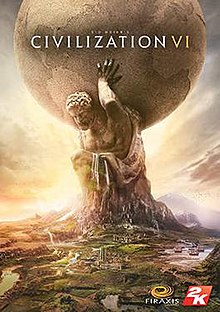
Civilization VI cover art.jpg
The game has been out since the end of 2017, so I didn't exactly jump right on the bandwagon. I have no real interest in playing the inevitably buggy and likely unbalanced initial release anyway, so why not wait? Besides, almost every entry in the Civilization series has been improved significantly by its first expansion. So I waited until I saw a good deal on the game with its first expansion (Rise and Fall) before pulling the trigger.

When I first fired up the game, I sat and watched the whole introductory video. The Firaxis folks know how to make a fun little intro, that's for sure. On subsequent game starts, I skipped it...but got weird graphical glitches in the intro screen and menu when I did. Fortunately those went away after loading a game, but still, minor issues like that are kind of silly in a big budget game with more than a year of patches under its belt. Plus it's not possible to skip the (very loud) logo intro screens without messing around with the game files in the install folder. Really, folks, you have to throw your logo in my face and blow out my ears every time I start the game? This is the sort of thing that makes me really happy I didn't pay the full $60 launch retail price.

Anyway, enough of the minor annoyances, on to the world-conquering. I've only played one full game as I write this, on the default settings. (A Culture victory with the Australians, for the record.) I'm sure I haven't seen everything the game has to offer, but I've seen enough of the most significant parts. Players of Civ V will feel mostly at home with Civ VI initially: similar graphical style, same one-unit-per-tile gameplay mechanic, tech tree looks vary familiar. But it doesn't take too long to run into some significant differences, most notably the concept of districts and the Civics tree (like technology, but for cultural/societal advances). And of course there's plenty of new leaders and civilizations to try out.

The district concept is really interesting. In earlier Civ games, when you built a building in your city, you didn't have to think about where to put it on the world map - everything was just packed into your city's space. Civ VI makes you pick out a tile within the city's influence zone for a specialized district, then the buildings related to that specialty end up there. Want research? Build a campus district, and populate it with a library, university, observatory, etc. Building ships? Locate a harbor district and drop in a lighthouse, shipyard, etc. The bigger your city, the more districts you can zone, and some even affect other nearby cities. The terrain around your city really impacts which districts you decide to build, and cities tend to naturally fall into specializations based on the districts they have.

World Wonders use a similar placement method as districts, requiring the player to pick a tile near the city to use for the wonder. Most wonders have restrictions on which tiles are eligible - must be hills, must be near a particular district, and so on. The result is that wonders tend to be spread out around the civilization, not concentrated in one or two giant cities. Bad for those trying a One City Challenge, I suppose, but I think I like the way it gives me more reason to pay more attention to cities beyond the first few.

The other major gameplay change that I really like is the active research model, with Eureka moments (for technology) and Inspirations (for civics). Completing an objective gives you half the research/culture necessary to unlock the technology/civic. Most are things you'd be doing anyway - building farms, founding cities, beating back barbarian hordes - so generally you're not going greatly out of your way to get the boosts. But the fact that those boosts are there is a great incentive to be actively pursing specific goals.

Civ VI seems like a solid entry in the Civilization series. The designers took some risks with new concepts like districts and active research, and on the whole I've been impressed. 4X game fans will definitely want to give Civ VI a try.

Wednesday, January 23, 2019

Acting with History in Mind

I've mostly stayed out of the furor over the high school kids from Covington Catholic school confronting a Native American protester - most everything I could say has already been said. But this article from The Root deserves to be spread widely, not just as a sarcastic takedown (which it most definitely is) but also for the attention it draws to historical and institutional racism.

Those of us on the privileged side of history need to take every opportunity to remind ourselves that we can't just look at ourselves and our immediate surroundings in isolation. There's a long history behind every interaction we have. Whether you're talking about high-profile confrontations at protest marches, or economic statistics like lower prices for black-owned homes, it's not just about what's happening today, but all the history that led up to this point. And this isn't just about how to respond at protest marches, but should influence all our actions - including the kinds of policies we support and who we vote for.

Full disclosure - I was one of those privileged white boys who had no understanding of how my actions might impact others, back when I was that age. (Case in point.) Experience and interactions with many people of varying races and wealth levels have taught me empathy, and I hope some of the kids from this incident can do the same.

Saturday, January 19, 2019

The Orville on Fox

Seth MacFarlane has been involved in a lot of television production in his career, the most well-known being Family Guy. But it looks like what he really wanted to do is captain a starship...thus, The Orville.

The Orville logo.svg
If you've ever watched Star Trek, you'll feel right at home with The Orville. The colors are modified, the starship design slightly different, there's a "Planetary Union" instead of "The Federation," the alien races have different names, and so on. But it's basically Star Trek: The Next Generation by another name, plus sitcom humor.

I'll admit, I was skeptical when I first heard about The Orville. I loved Star Trek: The Next Generation as a teenager, and I laugh at Family Guy as much as the next person, but MacFarlane was going to need to do more than just throw around jokes in space to make the show work. I was pleasantly surprised to find that I enjoyed the result...mostly.

When The Orville is being a spiritual successor to Star Trek, it's really good. Anyone who has watched much Star Trek is going to recognize a lot of the plotlines, some of which feel like they were lifted wholesale from episodes of one or the other of the Star Trek series. Not to mention the characters, who feel like the Star Trek: The Next Generation crew, right down to alien officers and an android. But whether lifting old plots or doing something original, The Orville does space exploration opera well.

Where The Orville falls short, in my opinion, is when it forgets that it's about the future. For instance, the first two episodes of the second season, which as far as I'm concerned could have happened in any generic suburb instead of on a futuristic spaceship. Outside of a few minutes on a shuttle performing a planetary rescue mission, both episodes were all about relationship drama and personal failings. Those things are important, but should be secondary to the futuristic space heroics, not the other way around.

As long as The Orville continues to stick to space exploration and dealing with alien races, I'll keep watching. Hopefully the ratings are such that Fox keeps it around for a while.

Sunday, January 13, 2019

Future Man (on Hulu)

Hulu's Future Man is a great example of niche television getting a chance in today's expansive landscape of entertainment production. And I am exactly the target audience.

FutureManTitle.png
The plot of Future Man revolves around time travelers going into the past to recruit a video game expert to help them save their future. Which is ridiculous and rapidly becomes more so, jumping around multiple times and places with barely a stop. Not that it really matters, because what Future Man is really about is hilarious pop culture references, insanity that seemed like a good idea at the time, and a whole lot of crude jokes.

I really like the performance by all three of the main actors: Josh Hutcherson, Eliza Coupe, and Derek Wilson. Each really sells the role they're playing, which I think is essential in this kind of comedy. It doesn't work if the characters don't seem truly invested in the events, not to mention often being confused by what's going on. All three of these folks do an outstanding job.

There are a lot of people who shouldn't watch Future Man. Anyone who's been offended by South Park, for instance. Or has issues with jokes about bodily functions. Or isn't steeped in pop culture time travel sci-fi, like Back to the Future and Terminator. Although I guess you could do without that last part, if you don't mind missing a good number of references.

Twenty years ago...maybe even ten...I'm not sure Future Man would have found a home. It's got a narrow target audience and wouldn't make it past the censors for broadcast TV. But these days, with all kinds of cable channels and streaming services producing a ton of content, there's a lot of room for all sorts of ideas. And I'm glad this one got a chance, because it's hilarious.

Friday, January 11, 2019

The Last Policeman by Ben H. Winters

The Last Policeman (Last Policeman, #1)The Last Policeman by Ben H. Winters
My rating: 4 of 5 stars

The Last Policeman is a commentary on how a lack of hope for the future affects people and, by extension, society. Oh, and it's also a detective story.

It takes only a few pages for The Last Policeman to paint an extremely bleak picture. There's an apparent suicide, taken in stride by almost everyone because it's such a common occurrence. Before long we learn this attitude is due to the end of the world, in the form of a massive object from space on a collision course with Earth. With no future to look forward to, many people have abandoned societal norms and gone on huge benders, or flown off to pursue "someday" dreams, or buried themselves in religion. Or simply decided to end their lives early.

Our hero, Detective Hank Palace, is not one of these people. He's sticking to society's rules, and investigating the case of the suicide. Which he believes could be a murder, and that investigation leads him to all sorts of unexpected people and places.

As a detective story, The Last Policeman hits a lot of the standard plot points. A few physical altercations, pushing a snitch for information, mysterious beautiful girl, stereotypical fellow detectives, uncovering deeper mysteries in the course of the investigation. By itself, it would seem formulaic. But set against the backdrop of the end of the world, the mystery aspect works to keep the story moving and the characters motivated.

This is only the first book in a trilogy, so it's no surprise that The Last Policeman ends with a lot of big questions unanswered. But I think it still works on its own, wrapping up the smaller story of the suicide investigation while setting up for later books to expand on the larger picture. I look forward to reading the next one to continue the story.