Showing posts with label games. Show all posts

Sunday, May 26, 2019

City of Heroes: Homecoming

It's good to be home.

City Of Heroes
For the better part of 8 years - beta in 2004, launch in 2005, until the servers shut down in 2012 - my single most extensive leisure activity was City of Heroes. Not just my favorite game, or most-frequented online community, or programming project (via the HeroStats addon). It was all of those things at once, and when you put it all together I spent more time in the game and related activities over those 8 years than I did watching TV shows, reading books, or just about anything else other than work and sleep.

After the shutdown in 2012, there were rumors of fans keeping the game alive, but I was never involved in any of it. They kept information under wraps to avoid any legal issues with the owner of the intellectual property rights, and to avoid a big crowd on their servers. But about a month ago, that all changed.

The Homecoming project is a fan-run organization that has set up City of Heroes servers for anyone to freely play on. They had some growing pains initially as the demand was overwhelming, but over the last few weeks have done a fine job stabilizing the system so the 20k+ players (around 9000 concurrent at peak) have a place to be super. That takes some money, of course, so they had a donation drive to raise about $6600 for server costs. It took 20 minutes - that's the kind of hunger the community has to keep this game available.

The game itself is changed somewhat from the old days. Quite a few quality of life changes, some new content that was in the works when the shutdown happened, and it's a lot easier to level up a character and obtain the end-game items and powers. The incentive to keep progression to a slow pace is gone when the game is being run for fun rather than profit.

I've really enjoyed getting back into the game and revisiting all the old haunts that I used to know so well. And more importantly, the characters. The first thing I did was recreate several of the characters I had on the old servers, looking as close to the same as I could remember. I'm far from alone in that, almost everyone who used to play the game has done the same thing. This is a major nostalgia trip for thousands of us, as well as being a fun game that we still enjoy playing. If anyone wants to find me in-game, PST to @ineffablebob!

The future of the Homecoming servers is uncertain. It depends on the core Homecoming team continuing to be willing to volunteer their support, and avoiding legal issues. For now, though, I'm not worried about the future, just enjoying being home.

Saturday, January 26, 2019

Civilization VI

It's been said that conquering the world is addictive. Got my latest fix in a sale recently with Civilization VI. I've played every entry in the Civilization series thus far, and will almost certainly continue to do so.

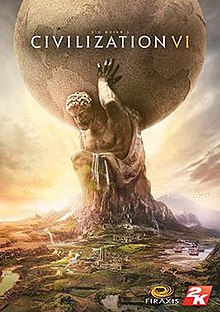
Civilization VI cover art.jpg
The game has been out since the end of 2017, so I didn't exactly jump right on the bandwagon. I have no real interest in playing the inevitably buggy and likely unbalanced initial release anyway, so why not wait? Besides, almost every entry in the Civilization series has been improved significantly by its first expansion. So I waited until I saw a good deal on the game with its first expansion (Rise and Fall) before pulling the trigger.

When I first fired up the game, I sat and watched the whole introductory video. The Firaxis folks know how to make a fun little intro, that's for sure. On subsequent game starts, I skipped it...but got weird graphical glitches in the intro screen and menu when I did. Fortunately those went away after loading a game, but still, minor issues like that are kind of silly in a big budget game with more than a year of patches under its belt. Plus it's not possible to skip the (very loud) logo intro screens without messing around with the game files in the install folder. Really, folks, you have to throw your logo in my face and blow out my ears every time I start the game? This is the sort of thing that makes me really happy I didn't pay the full $60 launch retail price.

Anyway, enough of the minor annoyances, on to the world-conquering. I've only played one full game as I write this, on the default settings. (A Culture victory with the Australians, for the record.) I'm sure I haven't seen everything the game has to offer, but I've seen enough of the most significant parts. Players of Civ V will feel mostly at home with Civ VI initially: similar graphical style, same one-unit-per-tile gameplay mechanic, tech tree looks vary familiar. But it doesn't take too long to run into some significant differences, most notably the concept of districts and the Civics tree (like technology, but for cultural/societal advances). And of course there's plenty of new leaders and civilizations to try out.

The district concept is really interesting. In earlier Civ games, when you built a building in your city, you didn't have to think about where to put it on the world map - everything was just packed into your city's space. Civ VI makes you pick out a tile within the city's influence zone for a specialized district, then the buildings related to that specialty end up there. Want research? Build a campus district, and populate it with a library, university, observatory, etc. Building ships? Locate a harbor district and drop in a lighthouse, shipyard, etc. The bigger your city, the more districts you can zone, and some even affect other nearby cities. The terrain around your city really impacts which districts you decide to build, and cities tend to naturally fall into specializations based on the districts they have.

World Wonders use a similar placement method as districts, requiring the player to pick a tile near the city to use for the wonder. Most wonders have restrictions on which tiles are eligible - must be hills, must be near a particular district, and so on. The result is that wonders tend to be spread out around the civilization, not concentrated in one or two giant cities. Bad for those trying a One City Challenge, I suppose, but I think I like the way it gives me more reason to pay more attention to cities beyond the first few.

The other major gameplay change that I really like is the active research model, with Eureka moments (for technology) and Inspirations (for civics). Completing an objective gives you half the research/culture necessary to unlock the technology/civic. Most are things you'd be doing anyway - building farms, founding cities, beating back barbarian hordes - so generally you're not going greatly out of your way to get the boosts. But the fact that those boosts are there is a great incentive to be actively pursing specific goals.

Civ VI seems like a solid entry in the Civilization series. The designers took some risks with new concepts like districts and active research, and on the whole I've been impressed. 4X game fans will definitely want to give Civ VI a try.

Monday, May 14, 2018

Stories: The Path of Destinies

This game has a great story and I really enjoyed seeing it unfold. Wish I could say the same about the combat gameplay.

Stories the path of destinies.png
Stories: The Path of Destinies takes place in a world populated by animals, in Aesop's Fables style. You play as Reynardo the fox, fighting against an evil Emperor (who is a toad) on the side of rebels against his army of ravens. It's a swashbuckling setting where Reynardo fights with magic swords in settings ranging from forests to mountains to leaping across the decks of battling airships.

It doesn't take long to get through the story...once. Reynardo has many choices to make as he heads towards a confrontation with the Emperor. Inevitably, the fox falls in the final confrontation. At which point he wakes up, back at the beginning, but with the knowledge he gained in his earlier failure. Each failure teaches our hero one of four truths, and once he knows them all, he can navigate towards a successful ending.

The story is told largely through a narrator, who not only tells you what's happening along the way, but also comments on how you go about your business. It reminds me a lot of Bastion. For example, if you're destroying barrels and crates, expect some snarky remarks about how destructive you are. And of course he has something to say when you die.

Which happens a lot, at least if you're as bad at these kind of games as I am. The combat expects you to fight a bunch of enemies at once, reacting quickly to impending attacks with blocking and using special moves against specific enemies. My twitch-reaction is awful, and it doesn't help that attacking with Reynardo's sword locks you into an animation, so you can't move until it's done. Also, you can't do the special moves at all times...I'd hit the dash button to get away from an explosion, for instance, and Reynardo would just stand there and die even if I had the stamina necessary for the skill. I did OK through the early game, but around the time I found the second truth, battles became a real pain.

It doesn't help that it's very difficult to heal Reynardo. There's a health-stealing sword, but you can't use it much before running out of energy. Occasionally you can find health in the environment, but you have to waste time breaking crates and such. That takes forever due to the aforementioned attack animation lock...move to a crate, break it, wait for Reynardo to finish his follow-through, pick up loot, repeat. It's tedious enough that I gave up after the first couple of levels and just waded into battle without full health. Which means that I died even more, of course. Fortunately you revive at the start of the battle and can retry it as many times as needed, but each time you start at half health, not full. During the entire second half of the game, I don't think I ever had more than half health.

The game is also very slow to start up. I've got plenty of computing power that runs most games easily, but this one took several minutes to load and switch between areas. I assume that's a result of the cross-platform nature of the programming, since the game was released for both Windows and PS4. It's a minor thing, but annoying. Add to that the fact that there's no way to skip the narration at the start of each area, even if you've heard it several times before, and the wait time before actually playing gets pretty tedious.

I really liked the concept behind Stories: The Path of Destinies, with the different ways that Reynardo's story could unfold. If it wasn't such a pain to actually play the game, I'd probably have seen more of those different stories. As it is, one time through was enough.

Friday, January 12, 2018

Into the Abyss in Path of Exile

In early December, Path of Exile launched version 3.1.0 of the game, titled War For The Atlas. This comes with a new set of challenge leagues, as per usual. I've been spending a lot of my gaming time there for the last month.
This time around, the new challenge league feature is Abysses, which spawn randomly in nearly every area of the game. When you find one and run over it, cracks open in the landscape and a whole lot of monsters pour out. At the end of the crack line is a big sinkhole with tougher monsters, generally 1-3 rares. The abyss might end after one sinkhole, or it might continue on for more...the most I've seen is 4. You move along, defeating the monsters and following the cracks, and if you move fast enough and survive then you're rewarded at the last sinkhole with a loot chest called an Abyssal Trove.

Occasionally, you'll get a entrance to a new zone called the Abyssal Depths instead of a trove. It's populated by a whole lot of abyss monsters and eventually a boss area. Mostly the boss is a type of totem that spawns tons of monsters until you've broken it, but in higher level Depths you might see a unique boss. I've fought two of those, and they're certainly a challenge. Tons of abyss monster adds, several of the totems to defeat, and of course the boss itself.

I really like the abyss feature. It's difficult, especially in the very low and very high levels. At the low end, your character might not be capable of handling a big swarm of enemies. At the high end, the sheer damage output of the rare and unique abyss monsters can be overwhelming. But that risk is accompanied by some great rewards. The troves have decent items, there's a lot of rare monsters that can drop good stuff, and there's a whole new class of abyss items that have mods not seen anywhere else.

As the War For The Atlas title indicates, there's also some significant changes to the end-game mapping system. There's been quite a bit of rebalancing, with a number of new maps and quite a few modifications. The Atlas of Worlds now has two factions fighting over it: Elder and Shaper. On the atlas, you'll see background effects indicating where the factions have influence, and if you run a map in an influenced area then there are additional faction specific hazards and item drops.

I'm just getting around to the middle of the atlas. I progress pretty slowly in Path of Exile terms, largely because I play almost entirely solo self-found (no teaming, no trading with other players). But I'm starting to see those atlas factions, and they certainly seem interesting. A few maps have had demon portals spawning tons of extra monsters, I've seen enhanced boss fights, and I've collected a few items with mods I've not seen before. Looking forward to seeing what else is in store as I move along.

As far as characters go, I'm mostly playing two. A Sunder Duelist Gladiator and my usual summoner Witch Necromancer. The gladiator is insanely powerful, as long as you avoid certain specific situations (physical damage reflection and lightning thorns, for instance). Sunder is so good that I'm not sure why anyone would bother with any other melee skill. As for the summoner, there have been some quality of life improvements in this version that are really nice. Most notably, you don't have to resummon your spectres every time you log in! In both cases I had one death and had to start a second version of the character, but both of those are running strong into the 80 levels.

The Path of Exile designers and developers continue to work their magic every few months, adding new and interesting features to what is already the best ARPG on the market. (In my opinion, at least.) I'm not sure how long they can keep it up, but as long as they do, I'll keep coming back for more.

Sunday, July 23, 2017

Middle-earth: Shadow of Mordor

First-person action brawlers aren't really my thing, but I can be persuaded to play them if the theme is interesting. And themes don't get a whole lot better than the Lord of the Rings universe.

Shadow of Mordor cover art.jpg
Middle-earth: Shadow of Mordor came out last year, which makes it a fairly new game for me to be playing. There's a sequel on the way soon, which of course means good deals on the original, so I picked it up for just a few bucks in a recent sale. I played it on my PC, though it's available on just about every gaming platform.

The story takes place in the time between the Hobbit (when Bilbo finds the One Ring) and the start of the main story in Fellowship of the Ring (when the Fellowship starts their quest and the War of the Ring begins). The main character is a ranger named Talion, who used to patrol parts of Mordor before Sauron and his minions began to reclaim it. He's haunted/possessed by a mysterious elven spirit, giving him all kinds of interesting abilities. Learning about that spirit makes up a good chunk of the storyline.

Shadow of Mordor does several interesting things as far as combat mechanics. There's the usual assortment of physical attacks - sword for melee, dagger for stealth, bow for ranged - but everything can be augmented by special spirit abilities. You can drain enemies of their energy to replenish ammo, for instance, or have your spirit augment melee attacks to stun enemies. Lots of blood and gore while beating up orcs, too, of course. I'm not particularly good at these kinds of first-person action combat mechanics, so it took me a while to get the hang of it, but eventually I got fairly decent at taking on hordes of orcs.

There's quite a bit of Middle-earth flavor in the game, which I really liked. You can find various artifacts with bits of lore embedded, each of which has a bit of story attached. There's small silvery runes called Ithildin to collect, which unlock portions of a image similar to the hidden Moria door. And throughout the main story there are references to the larger world, from references to coming war to an appearance by Gollum. They do take some liberties with the world that may upset some of the Middle Earth purists out there, but I don't mind that sort of thing, figuring I can just ignore the bits that don't seem to fit.

As Talion goes around Mordor, he'll run into stronger enemy leaders that are tougher to kill. These captains and war-chiefs are unique, and they'll remember if you run from them or if they kill you. They get more powerful over time, too. You can even find special missions to defeat captains who defeated your friends (assuming you're playing online and linked to a friends list). Those encounters add some extra depth to the kill-'em-all gameplay mechanics. And eventually you can use spirit domination to bring some of them around to your side, which adds a whole new facet to your fighting style.

There are some extras beyond the main story, mainly combat challenge modes. I didn't really mess around with most of that, since the combat wasn't the draw for me anyway. I was there for the story and Middle-earth world. I'm sure players that are more into the combat would enjoy them, though.

I had a great time roaming around Mordor in Shadow of Mordor. Well worth playing for any Tolkien fan, or if you like the gameplay style. If you like both, all the better!

Tuesday, May 30, 2017

Renowned Explorers

The folks at Abbey Games know their business. I loved their first game, Reus - one of the very few that I've enjoyed enough to unlock all the achievements on Steam. Renowned Explorers is their second effort and it did not disappoint.
Renowned Explorers logo.png
In Renowned Explorers, you take charge of a group of three adventurers who set out on expeditions around the globe to discover fame and treasure. The gameplay takes place on three levels:
  1. The between-expeditions strategy phase where you improve your crew, make scientific discoveries, and plan where to go next.
  2. Moving from location to location on each expedition's map. This part is semi-randomized. Many of the map components are always the same, but located in different spots and connected in different ways from one game to the next.
  3. Turn-based battles between your crew and various enemies, ranging from animals to villagers to cultists, and even the occasional angry ghost.
I use the term "battle" loosely, because you have three different approaches for conflict resolution. You can be Aggressive with actual physical harm, or Devious with calculated insults, or make Friendly overtures. The idea is to overcome their resistance to your cause, and any of the three approaches is viable as a primary focus. In each conflict, there's an overall "mood" based on the combination of your approach and that of the enemy. You often need to tailor your approach based on the specific enemy you're facing. For instance, if you encounter a bunch of Devious monkeys, it may not be a bright idea to charge in Aggressively, since your crew gets a penalty when the mood is "Escalated" (you Aggressive, enemy Devious).

I really like this "combat" system that gives you more options than just smacking around the bad guys. Making good use of the mood can swing a conflict in your favor (or vice versa, of course). Which crew members you have along in a particular game can make the exact same encounter play out very differently from one game to the next. And the game might give you bonuses for using a particular approach, giving you incentive to find a way to prevail even despite negative moods.

A game consists of taking your crew on five expeditions. You collect renown based on how well you find gold, gain status in the eye of your peers, and make scientific discoveries. A game is won if you exceed 2500 renown after finishing your five expeditions. I won most of the games I played, though occasionally I'd fail to reach 2500 renown or my crew would be defeated in a tough encounter.

There's plenty of crew members to choose from, divided into four classes: scientist, fighter, scout, and speaker. Each class gives you bonuses at certain types of challenges, and each individual crew member has strengths and weaknesses during conflicts. Choosing a crew such that the members compliment one another is important!

The game got quite a bit easier once I picked up More to Explore, the first expansion. It added two new mechanics that give you additional bonuses: Campfire stories, where your crew's expedition stories give you bonuses; and Treasure bonus choices, allowing you to choose from a set of bonuses when finding a significant treasure. The latter is especially useful since Treasure bonuses are very powerful, so being able to choose one that fits with the crew you're playing helps a lot.

There's also a second expansion out now, The Emperor's Challenge. It adds a whole new game mode where you're collecting trophies based on completing specific challenges, rather than just going for the highest renown score. I haven't played it quite as much yet, but I've liked it so far. The trophy requirements often go against the strengths of your crew, so you need to be extra careful in planning how to get those trophies while still staying alive and completing your expeditions.

There's very little to find fault with in Renowned Explorers, in my opinion. If the style of gameplay appeals to you, then the game will have its hooks in you pretty quickly! My only real complaint is that the options for expeditions is fairly limited, so you end up doing the same things repeatedly as you play more games. The expansions are helping with that by adding more expedition options.

I've made it through about 70% of the achievements in Renowned Explorers, and I fully expect that I'll keep playing until I get the rest. After this and Reus, I'm looking forward to seeing what Abbey Games comes up with next!

Wednesday, May 17, 2017

BioShocked

First-person shooters are not my favorite genre. I played my share of Doom, Wolfenstein 3D, and Quake like every other nerdy high school and college student in the 1990s, but they always took second place to strategy and role-playing games. So it takes something more than just running around with a weapon and a target-rich environment to convince me to devote time to a shooter. BioShock is one of only two such series that have done that and held my attention enough to play all the way through. (The other is Mass Effect, though I've yet to try the new Andromeda entry in that series. Probably not a coincidence that both have science-fiction aspects.)
Much of BioShock's appeal for me is the world-building. BioShock and BioShock 2 take place in the 1960s in Rapture, an underwater city with a steampunk feel that's populated largely by genetically modified monstrosities. The environment has a post-apocalyptic feel as you pick your way through what remains of the once-luxurious city. BioShock Infinite is a bit of a different animal, as it takes place in a floating city called Columbia in the early 1900s. Unlike Rapture, Columbia isn't a run-down wreck and many of the people are normal civilians. (At first, anyway. Plenty of destruction as the game progresses.)

In both games, you pursue leaders who created a dystopia while following their own vision of perfection. In Rapture that largely takes the form of genetic modification, with lots of physical and psychological manipulation to keep the resulting monstrosities under control. In Columbia, you're working against an elitist, racist cult. There's a "grand society gone wrong" feel to both Rapture and Columbia, paired with a mix of old and future technology. That combination reminds me of golden-age science fiction in many ways; playing through these games feels much like reading some of those old stories.

In Rapture, there's a major moral choice in whether to save or harvest "little sisters" that provide power for your genetic modifications. (Personally, I have a hard time believing that anyone doesn't want to save the little cuties.) The choices don't have a lot of effect on the gameplay, but the ending differs based on what you've decided to do along the way. Nothing in BioShock Infinite's Columbia setting seemed to provide the same kind of moral decision-making, which was a little disappointing.

The two settings do eventually connect, but not until near the very end of BioShock Infinite. There's an add-on story called Burial at Sea that was released as DLC for BioShock Infinite that makes the link much more explicit. I thought the add-on was very well done, worth playing for anyone that enjoyed BioShock Infinite, but it's clearly targeted for people who have played the games in both settings.

I played these games mostly to work my way through the story, so the actual gameplay mechanics weren't my main focus. I purposely chose the easiest difficulty mode to avoid getting stuck in long fights, and picked abilities that minimized the need for shooter skill. For instance, in BioShock 2, I picked up the Security Command ability and upgraded it so I could summon a robot to fight for me. You can't ever avoid the shooting entirely, but it can be made less painful. Even so, there were sections where I had trouble making it through alive. Fortunately, death is a temporary state in these games.

It's possible to find some replay value in the BioShock games, either finding different ways to fight or changing moral choices to get different endings. None of that appeals to me, though. Most of the fun for me is in discovering things about the world as I move through the story. Once those surprises are gone, it's no longer very interesting, even if there are some differences. And playing with more difficult combat, like BioShock Infinite's 1999 mode, holds zero appeal whatsoever for me.

The BioShock series is well worth playing through at least once for any gamer. Even if first-person shooters aren't your thing, the story and world-building are worth the effort.

Sunday, April 23, 2017

Squarecells

Another Matthew Brown game, another few hours of puzzling. After playing through all the Hexcells games, I was happy to pick up another of Brown's puzzlers.
Squarecells is a logic puzzle game like Hexcells, but the cells are all square instead of hexagonal. Obvious, yes? That's pretty much where the obvious stuff ends, as each puzzle gets more complex with more limited starting information.

The game starts out easy and gets gradually more complex as you move through each of the 36 puzzles. (Arranged in a 6x6 square in the menu, of course.) Various types of clues - number of pattern cells in each row/column, number of connected pattern cells, separation between pattern cells in a row/column, and so on - show up as you move along. All the different types are combined in the tougher puzzles to make the player's life a little harder.

Brown believes in minimal UI design, and for the most part it works well. There's not a lot of options needed in this kind of game. But I did find myself wishing he'd included one option - different colors for cells once you've marked them as part of the pattern. That was the case in Hexcells, but in Squarecells the color stays the same with a small dot added in the upper right. Not nearly as much contrast, so that late in the larger puzzles I found myself doing a lot of squinting at the screen as I looked for which cells weren't yet marked. It's not a major flaw, just annoying.

I spent a happy few hours working through the puzzles in Squarecells. Well worth picking up for anyone who likes these kind of logic puzzle games.

Tuesday, April 11, 2017

Telltale's Game of Thrones Season 1

I bought the Game of Thrones episodic game from Telltale a while back during a sale, and just recently got around to playing it.
It's unfortunate that the first thing I noticed about this game is how non-user-friendly it is. Installation required me to download direct from Telltale, rather than using Steam or some other distribution platform. (I assume that was because of the sale price, since it's available on those platforms, but I only had the one option.) Then I had to wait through an installation and update process, which was extremely slow. After playing the first episode, I had to download each of the other five episodes one at a time (also very slow). The game runs in a tiny window on my desktop with no option for higher resolution. The graphics are choppy, even more so than in other Telltale games I've played, and on occasion the sound gets out of sync. Several times the game screen blanked out and I had to kill the program to restart, and once it crashed trying to reload my save (fortunately a second attempt worked). It takes a lot of patience to get through all those technical and distribution issues.

Beyond the technical issues, the game shares the pros and cons that go with pretty much all episodic adventure games. My least favorite of these is the action sequences, including one almost immediately after starting the first episode. I had the usual trouble with them, dying several times largely because I didn't understand what was being asked of me (why isn't my character crawling away from the bad guy...whoops, I'm dead...oh, it wanted me to press down instead of up) and had to repeat the sequence. But I was always able to get through it once I'd seen what the game was asking for, and the sequences aren't terrible...just annoying.

This Game of Thrones adventure does a reasonable job of replicating the Game of Thrones feel. The player represents the Forrester family, a northern noble family traditionally tied to the Starks. The game switches you back and forth between various family members in different locations, which is a bit different since most of these kind of games are from a single viewpoint. It's familiar here, though, since the books and HBO show use the same kind of viewpoint switching. There's plenty of intrigue, betrayal, and spiteful enemies, as well as the occasional death of a character who seemed central to the plot.

Both the strongest and weakest points of the story in this game are its close ties to the events in the books/HBO show. On the one hand, I understand that it's a big draw to see the main characters like Tyrion or Cersei or Jon Snow, and to be affected by major events like the Red Wedding. These kind of interactions give the player a feeling of being part of the same world they read about or watch on TV. But the same close ties limit what can happen in the story and make the player's choices seem less important. When you know what's about to happen at the wedding of Joffrey and Margaery, for instance, it seems pretty silly to be engaged in political maneuvering for the favor of Tyrion.

Much of the time, I felt like I was just watching the story rather than being part of it. I could make some small impacts, but some pretty bad things were going to happen no matter what I did. That's a problem with all of these episodic adventure games, but it seemed worse with this one than most. I suppose that's to be expected in the Game of Thrones setting, where bad things seem to happen to most everyone all the time.

Don't expect to learn much in the way of answers at the end of the sixth and final episode. It feels very much like the middle of a story, with only one really big question answered (whether or not the North Grove is a real place). Clearly they're setting up for at least one more season. Had I realized just how much they were going to leave unresolved, I probably wouldn't have played at all until season two was out.

If you're a Game of Thrones fan and looking for something to augment the books/show, this Game of Thrones episodic adventure game is a decent choice. But if you don't like or have no opinion on Game of Thrones in general, I wouldn't bother with this game. It's unlikely to change your mind about the world if you dislike it, and the books/show are a much better way to get involved for the first time.

Sunday, March 12, 2017

Marvel Heroes 2.0

The Marvel Heroes folks sent me an email a while back announcing the launch of their "Biggest Update Ever." It had been several months since I played the game, so this seemed like a good time to see what had changed.
It turns out that what changed is darn near everything about how you build out each character. The action-RPG gameplay is more or less the same, and you still have pretty much the same story content and challenge modes. The level of difficulty has been reset in that content, though, so that higher difficulty modes are more of a challenge than they used to be.

Under the old system, a large part of character planning involved trying to get as many levels as possible in your key powers. The new system eliminates power levels entirely, and adds the concept of talents that can change how powers work depending on which talents you select. If that sounds familiar, that's probably because it's pretty much the same change we saw from Diablo II to Diablo III. In general I like it, especially since it means you see all of a character's powers (except the ultimate) by level 30.

The change to eliminate power levels had a big impact on items as well, since adding power levels was a big part of gearing character in the old system. Almost every item got a revamp, and for the most part you can do pretty well just by getting the unique items specific to your character plus a few artifacts. When I logged in some of my old characters, I was mostly able to jump right in without worrying too much about changing out their old gear, even though the stats on that gear had changed. I'm sure there's new ways to min-max stats, but the old stuff is mostly still usable.

Another major change is the simplification of the end-game character improvement system. The old OMEGA point system was extremely complex, so a key feature of the new Infinity system is simplicity. There are only 6 groups of 5 options for Infinity point placement, much fewer than the number of OMEGA nodes. I found it to be fairly easy to understand, and it certainly seems to have plenty of room to grow in the future if the developers decide to go that route.

I was less enthusiastic about the ramping up of difficulty. The "green" lowest level is still pretty much the same, but "red" and "cosmic" levels seem significantly harder than I remember. I suspect that the designers realized that power creep was becoming a problem - high-end characters with the best gear were just too powerful - so decided on an across-the-board difficulty increase during this major update. I'd rather that they'd paid more attention to the power creep to begin with. Still, at least this addresses the situation to some extent, and hopefully they've learned a lesson and won't make the same mistake going forward.

After spending a few days going back to some of my old characters, I felt fairly comfortable with the changes. It's a credit to the design and development teams that they were able to make these big changes in such a way that it was pretty easy for players to make the transition.

Saturday, February 25, 2017

Life Is Strange

While it is certainly true that life is indeed strange, this post is about the video game, not the philosophical observation. Life Is Strange is an episodic adventure game (similar to the various Telltale games). Note: It's pretty much impossible to completely avoid spoilers when talking about this kind of game, but I'll try to keep it minimal.
Life Is Strange cover.jpg
The protagonist in Life Is Strange is Max, a photography student recently returned to the town of her childhood in order to attend the prestigious, private Blackwell academy. She almost immediately discovers that she's somehow gained the ability to rewind time. Her first use of this power is to save her friend Chloe, who she hasn't seen for years, from being shot. Max proceeds to use her abilities to solve problems from the mundane (saving the occasional small animal, moving a fellow student to avoid a puddle splash) to the remarkable (saving lives, finding missing persons).

Life Is Strange has two main drivers: a missing-person mystery and the relationship between Max and Chloe. The missing person is Rachel, a girl from Blackwell who was Chloe's friend and went missing just before Max came back to town. Max had dropped out of contact with Chloe after moving away, but they rediscover their friendship as they work toward finding out what happened to Rachel. Chloe has had some terrible life experiences and has reacted by becoming a prickly, difficult-to-like rebel. But she and Max genuinely care for each other, and the game does a great job of showing that relationship.

The game touches on quite a few modern social issues while moving through the mystery-solving and relationship-building. Chloe's step-father is an ex-soldier struggling with reintegration into civilian society. There are several instances of bullying at Blackwell, including one that leads to a suicide attempt. Drug use is rampant among the students. It's fairly heavily implied that Chloe is lesbian or bi-sexual, but unwilling to be open about it. Max does have some opportunity to help in these areas, though she can't always find a resolution..and sometimes attempting to help makes things worse. Much like real life.

Storytelling in Life Is Strange is uneven, particularly early on, but it does get better later. At first, everything you encounter seems mundane and unimportant. Max mostly wanders around Blackwell and discovers a whole lot of standard teenage drama, occasionally using her time powers to harass a bully or smooth out a relationship. I might have been tempted to give up, had I not heard good things from friends about the game. It wasn't until the third episode that I felt the story really picked up, but once it did I was hooked and anxious to finish it out. The storytelling may not be smooth, but in the end I found it to be well worth the effort to get through the rough patches.

There are also some technical and mechanical issues with the game. I noticed several places where the video and audio weren't properly synced up. There were more than a few times when I had a hard time maneuvering Max and/or the camera view so I could select a particular item or other interaction. Nothing game-breaking, but certainly annoying.

The player never gets an explanation of how Max got her powers. We do learn eventually that she has limits, and her abilities might even be causing some of the very catastrophes that she's trying to prevent. I didn't mind that the writers chose to leave that part of the mystery unrevealed, largely because it doesn't really matter where the time abilities came from. The way the story unfolds, it wouldn't make any difference whether it was magic or future technology or anything else.

Playing through Life Is Strange was a very interesting experience. It may not be the most polished game, but I thought the characters came alive, and the story was engrossing once it got going. Well worth the 10-12 hours of playtime.

Sunday, December 18, 2016

Star Realms: Rescue Run by Jon Del Arroz

Star Realms: Rescue RunStar Realms: Rescue Run by Jon Del Arroz
My rating: 3 of 5 stars

I bought Rescue Run largely because I like the Star Realms game and wanted to support it. The book is set in the game's universe, though the linkage pretty much ends there. The game's fleet-building mechanics aren't really reflected in the book, though players will recognize plenty of names.

Leaving aside the Star Realms tie-ins, Rescue Run is a decent if not particularly imaginative story. Renegade thief is collared by the powers-that-be and forced to join a dangerous mission against an evil oppressive empire - seen it before. The empire in this case is a corporate entity, and the renegade is a somewhat insecure woman rather than the usual cocky ladies man, so it's not entirely a generic formula. There's a love story embedded, of course, with a sheltered-but-empathetic scion of the evil empire falling for the renegade. The characters go through plenty of hard-to-believe close calls and lucky escapes, which is to be expected in this kind of against-all-odds storyline.

As far as game tie-in novels go, Rescue Run is pretty good. The overall story arc and themes were a bit too generic for my taste, but the writing is well executed. Certainly if you're interested in delving into the Star Realms universe, it's worth the read.

Sunday, October 16, 2016

MTG: Kaladesh Sealed at Game On

I made the drive over to Game On in Midland to play in their Kaladesh sealed event this weekend.
This is the same store where I played in the Eldritch Moon sealed event a few months ago. This time, I didn't go alone - my friends Mike and Tim drove up from Owosso to play as well. (Neither had much success in terms of winning games, but both got some great cards - couple of Smuggler's Copters for Mike and a Torrential Gearhulk for Tim, among others.) Like last time, it was well attended, with a total of 34 people. Once again I was pleased with the way the folks at Game On ran the event. Nice play space, good group of players, solid organization and control by the organizers and judges.
My sealed pool was middling, with only one really great card: a Bristling Hydra. Also had a Wildest Dreams in green, though I didn't put it in the main deck. My other rares weren't playable, unfortunately - either too reliant on other cards that my pool was weak in (Depala, Syndicate Trafficker, Blooming Marsh) or just bad (Paradoxical Outcome). I had a good number of other green creatures, mostly notably two Longtusk Cubs, but no good green spells. My red removal was fairly decent: two Furious Reprisals, one Welding Sparks, one Chandra's Pyrohelix, and an Aethertorch Renegade. None of my other red creatures were great, but enough were playable to fill out the deck. Some good artifact creatures would have helped, but only two were worth playing: Sky Skiff and Weldfast Monitor. There were a couple of artifact removal spells for the sideboard - both Demolish and Creeping Mold helped out when I had to deal with some big vehicles. Outside of that Hydra and the Cubs, my creatures weren't good enough to take over a game, so the plan was to keep pressure on my opponent and hope the removal plus those three good creatures was enough to put me over the top.
That plan went nowhere in the first round, when I faced a red-white deck with several vehicles and plenty of tempo spells. I lost quickly in the first game to an onslaught of aggressive creatures, removal spells, and a couple of vehicles. In the second game, I was the one who drew aggressive creatures and removal spells to take a big early lead in the life totals, but didn't get any of my three finishing creatures until my opponent had clogged up his side of the board. That game took forever, almost taking up all the time in the round. In the end, I won since I had that early lead to work with and a higher creature total, just barely squeaking past his defenses with sheer numbers. Time was called before we could finish game three, so the first round was a draw.

The next three rounds went mostly according to plan. I won every game where I drew the Hydra, and several where I didn't but had a Cub and/or some good removal spells. I won all three rounds despite seeing some pretty good cards on the other side of the table. Noxious Gearhulk, for instance, and it's a good thing I'd sideboarded in that Demolish to deal with it. Two of those rounds were against opponents using three colors, and I'm pretty sure that helped me out quite a bit in those games. It's possible to play enough mana-fixing for three colors in this format, but it tends to slow you down and that's trouble if the opposition gets a good start.
To make the top eight, I needed to win one of the final two rounds. Sadly, it was not to be. I took both rounds to three games, so it was very close, but in the end the other players just got the better draws. My round five opponent had some amazing artifact/vehicle combinations that just overran me, with red and black removal to back them up. Chief of the Foundry plus Fleetwheel Cruiser is a real beating if you don't draw an answer right away. He got that Cruiser in all three games, and I was lucky to take one of the three. Round six was closer, against a green/white deck that had both large ground creatures and flyers. Lost the first game when I couldn't remove enough of his flyers, then won game two when I got the removal and kept a Cub alive long enough to win. Game three was close, but I couldn't keep up with his Skysovereign killing several of my creatures, a Durable Handicraft pumping up all his guys, and even a Wildest Dreams bringing back some of his creatures that I'd managed to kill.

End result, 3-2-1, just outside of the top eight. My one draw and two losses were all to players who made the top eight, and all three of those went to a third game. Any of those could have gone the other way with just a slightly better draw. Also, I only caught myself in one play mistake that actually mattered (forgetting to trigger energy gain off a Longtusk Cub, which later meant I couldn't give it a counter to save its life) and that turned out not to make a difference in the result of that particular game. Always feels better to know you played your best, even if the end result wasn't quite what you'd have liked. All in all, an enjoyable event, well worth the drive out and back.

Friday, September 30, 2016

Chilly Weather in Cities: Skylines

Just as I was starting to consider putting Cities: Skylines aside for a while, a sale offer shows up in my inbox for the After Dark and Snowfall expansions.
Lot of white landscape on the winter maps.
The deal was essentially two expansions for the price of one, not bad especially when you consider that both are fairly recent. After Dark released just over a year ago, and Snowfall last February.

I started a new city after enabling the upgrades, using a map with the Winter theme. A winter map feels like living in Alaska or Greenland. It gets really cold in the winter, snow is everywhere, and you can provide amenities like ice sculpture parks and hockey rinks to beautify your city. The occasional snowstorm will cover everything, including the roads, requiring plows to keep things running.

Those extra requirements make building a winter city more challenging than the more temperature climes. All the other services are still in demand as well, so managing finances to provide it all is more difficult. I found myself expanding much more slowly than I had previously, and paying more attention to the details of my city finances.

There's a temperature gauge to keep an eye on - the colder it gets, the more your citizens will demand heat. At first, I didn't realize that a new heating system was available, so a lot of money and time was spent on extra power production for electric heating. Eventually I discovered the ability to build a heating utility and run heating pipes along water lines, and that made things significantly easier to manage. Adding that heating system isn't cheap, though, and slows growth even more.

Between the two expansions, there's plenty of other additions besides the cold weather. New transportation options like taxi stands, requirements for road maintenance facilities, commercial zones specializing in nightlife, etc, etc. Some existing features have been tweaked as well, such as a smaller footprint for certain buildings (like the high school). And of course there are new unique buildings to unlock.

The new features certainly bring new life to the city-building experience. Plenty of new things to try out, and the cold-weather challenges are fun to work with. Looking forward to more of the same with future expansions.

Monday, September 26, 2016

MTG: Kaladesh Pre-Release (2HG)

After playing in an individual event on Saturday, Sunday was team day for Kaladesh pre-release weekend.
My friend Dan and I played in this two-headed giant limited format event for the last set release, and it was a lot of fun. So I was happy to do it again for Kaladesh. We played up at Big Kidz Games, and the turnout was great - 13 teams, 26 players.

Considering how heavy Kaladesh is with artifacts, our shared card pool didn't have very many of them that were useful. We only had about 5 vehicles between the two of us, very few useful artifact creatures, and our only mythic rare was Aetherworks Marvel. Could be an interesting combo card, but not that useful in limited. We ended up building a red-green deck for me, with fairly aggressive creatures and some removal, and a black-white deck for Dan, with a lot of fabricate creatures and several combat tricks.

Unfortunately, it didn't really matter much what was in our decks. That's because three of the four rounds we played were decided by land draws (or lack thereof) for one team or the other. Round 1, one opponent had to mulligan multiple times and still ended up with only one land for the whole game, so we won easily. Round 3, one opponent got stuck with a bunch of high-casting-cost stuff in his hand and never drew into enough lands, so again we won easily. Round 4, I kept a two-land hand with several two- and three-cost playables but never drew the third land, while Dan was flooded with all lands. Lost that one badly.

Only round two was a real game, and that one we lost as well. Both sides played a whole lot of ground creatures, resulting in a stand-off where neither team could attack. The only threat we managed to get on the board was a Sky Skiff, the only vehicle I had in my deck, but then they stole it with a Shrewd Negotiation. Then the better card quality of their pool showed up, with an Aethersquall Ancient and Wispweaver Angel on one side, and multiple graveyard recursion effects on the other. The game ended quickly from that point.

That put us at 2-2, firmly in the middle of the pack. Too bad about all the poor shuffles, and we didn't win any extra prizes, but that's all right. Still had a good time hanging out with Dan and the rest of the folks up at Big Kidz Games!

Friday, September 23, 2016

My Guest Spot on the QT3 Games Podcast

Quartertothree.com is one of my favorite gaming websites, and I spend a good amount of time on the forums there as "ineffablebob". Recently I was fortunate enough to have the chance to do a guest appearance on the QT3 Gaming Podcast with Tom Chick.
Tom owns the Quartertothree.com site and posts many game and movie reviews there. Unlike me, he's famous enough to have his own Wikipedia page. (I'm good with not having one, by the way. Under the radar!) He's on Patreon, and is one of a few different folks that I support there.

Tom does a regular gaming and movie podcast. The games podcast has recently shifted to a format where Tom and one guest (generally from the forums) talk about a game of the guest's choice. This is actually a revival of a similar format from a few years ago, and everyone on the forums has been enthusiastic in support. It's a good chance to get to know the other folks on the forums a bit.

When Tom asked if I'd like to be a guest on the podcast, I jumped at the chance. I always like talking about games - especially when I get to choose the topic! I've enjoyed listening to the other guests, and hopefully people will find the podcast I'm on interesting as well. Here's a link directly to the QT3 page for my guest appearance.

We spent the first half hour or so in pretty standard interview format, with Tom asking me some "get to know you" questions. He's good at it...the discussion was smooth and easy. Then we got into the games. I'd chosen Cthulhu Realms as my game, largely because it's the one I've been playing most over the last several weeks. (Well, I've also played a lot of Cities:Skylines also, but I wanted to have some multiplayer discussion.) Tom warned me that he wasn't a big fan of it, but that's fine, I like having discussions with differing opinions.

Turns out that the reason Tom doesn't like the game wasn't so much the game itself, but the theme. He's much more into the Lovecraftian mythos than I am, and Cthulhu Realms is a very light and irreverent take on that world. It's funny, but I can certainly see how someone who is a big fan of the dark, existential horror of that world wouldn't much like the way that Cthulhu Realms presents it.

Having said that, we still had a good discussion about the game and its mechanics, leaving aside the theme. We even played it while we talked, which was easy enough to do through the Steam version of the game. Bit hard for the podcast listeners to follow without seeing the game, but I think our discussion was still interesting enough as the game went along.

Thanks to Tom for letting me do a guest appearance on the podcast! I had a blast, and would love to do it again if he ever runs out of new people to talk with.

Thursday, September 15, 2016

Cities: Skylines - Wrecking Cities for Fun and Profit

Building something is great. Destroying it can be just as fun.
The government offices. Not much to look at, considering all the pain involved in unlocking it.
Back in the day, SimCity offered a disaster menu to rain down destruction on the hapless citizens of your simulated city. I have many a fond memory of building up a sprawling cityscape, then calling down tornadoes and earthquakes to cut swaths of destruction through it. Cleaning up the destruction afterward is part of the fun, too. In fact, sometimes I'd send in a disaster as a sort of urban renewal device to rework an area I wasn't happy with.

The base Cities: Skylines game doesn't have similar disasters. There's an expansion coming that adds them, but until then, your city is safe from floods and storms. But that doesn't mean there's no incentive to wreck what you've built.

There are a variety of unique buildings available to unlock, based on reaching certain thresholds in city statistics. Many are positive, such as acquiring a large amount of cash reserves or building large areas of residential buildings. Others, though, aren't so good for your city: go into debt, pile up garbage across the city, have low citizen heath, and so on. Sickness and garbage aren't as flashy as earthquakes and floods, but they can bring a city to its knees.

I recently decided to try for the Government Offices unlock, which requires that the average building in the city have 40 units of garbage piled up. That's well above the threshold at which people get angry, so I knew nothing good would happen. Cities: Skylines allows you to control your city service buildings, so I disabled all the garbage collection services. (Which is much better than destroying them, since you don't have to pay to rebuild later.) Sure enough, before long my city was awash in both garbage and unhappy citizens.

By the time the garbage had piled up to the point where the Government Offices unlocked, a lot of citizens had fled the city. Couldn't handle the smell, I assume. That left a lot of abandoned buildings, which coincidentally unlocked the Cathedral - 2000 abandoned buildings maintained across five weeks of game time. Two unique buildings in the same self-inflicted disaster!
The cathedral.
Then came the hard part - recovery. Initially, I just turned all the garbage collection services back on. That cleaned up the city in a few weeks, but didn't do anything about all those abandoned buildings. Land value plummets if there are a lot of abandoned buildings, so before long I was presiding over one massive slum. I'd almost run out of money before I realized that a change of tactics was needed.

It's a good thing you can pause the game, because there were a lot of abandoned buildings to clear out. I spent the better part of a half hour scrolling across the entire city, bulldozing building after building. Then I had to go back and make sure that the now sparsely populated area was connected properly to power lines, since destroyed buildings no longer transmit power to their neighbors.

It took a while for the land value to recover, so I was busy for quite some time micro-managing the cost of city services and destroying new abandoned buildings when they popped up. Ended up having to take out loans to keep the city finances afloat. Fortunately, people started to move back in before too long, so I could cover the loan payments and slowly start building the city back to its former glory.

Those unique building unlocks are a one-time thing, so if I hadn't managed to pull my city out of its downward spiral, I could have started a new one and still kept my building options. I'm glad I saved this one, though. Adds a little extra sense of accomplishment to the process!

Saturday, September 10, 2016

Cities: Skylines

City building is addictive. So, so addictive.
My first city - right on a riverbank.
Cities: Skylines is the latest in a long line of city simulators that I've played way more than is good for me. The original SimCity found its way onto the Macs at school when I was in high school back in the early 1990s. If I remember correctly, playing it was even a legitimate way to spend study hall time. SimCity 2000 was a mainstay on my computers in college. I've played a few of the Anno series, Cities in Motion, and probably several more than I can't think of right now.
They love their soccer in simulation-land. You can even zoom in close enough to see the players on the field.
I skipped the 2013 release of SimCity, largely because everything I read or heard about the game made it sound poorly designed. Requiring a connection to a central server and emphasizing interaction with other players makes sense for an MMO, but not a city-builder. The space you had to work with in building your city was limited, too. Some of that was addressed in later releases, but by then I'd already decided not to bother with the game.
Once you get harbors in place, the boats start coming in. Good for cargo and tourism.
When Cities: Skylines came along in 2015, it was widely hailed as the game that the community had been expecting from SimCity. I picked it up a few weeks ago and have played it for about 10 hours so far. From what I've seen thus far, everything I'm looking for in a city builder seems to be present.
The power generation block. Wind, solar, nuclear...plenty of options.
The weakest part of Cities: Skylines, in my opinion, is the very beginning. When you start a new game, you're given a list of potential areas to choose from. There's some information about what's in each, but not much to tell you what it means. Once you pick one (probably at random), you're looking at an empty landscape without much direction. There are some tips telling you what the various menu options do, and suggesting which ones you might want to start with, but it doesn't give a lot of detail. I've played so many city building games that I more or less understood what was going on, but someone new to the genre might have a tough time.
Once of several unique buildings you can unlock. This one is a massive office tower.
Once you get going, just about everything that Cities: Skylines does is great. As you build up your city, new building choices and other options are unlocked based on the city's population. You also get a cash grant at each milestone, so you can actually afford to try out the new things. The initial plot of land you have available is fairly small, but as you progress, you can buy up additional land around that initial area. I'm sure there are limits eventually, but you can build up a good-sized metropolis without any trouble.
Downtown at night, with that same office tower in the middle.
There is a lot of depth and complexity available in Cities: Skylines, but I haven't felt like I was required to use it. For instance, it's possible to customize the budget by allocating more or less money to the various city services, and those settings can be different during the day and night. I've barely touched those sliders and my city is working just fine. I'm sure it could be more efficient if I got into the details, but the game isn't forcing me to go there if I don't want to.
A wider night shot.
The developers did a good job taking advantage of current technology with Cities: Skylines. I've not had to worry about performance (some older games used to slow down terribly with larger cities), and the graphics are beautiful. You can zoom out to get a birds-eye view of everything you've built, or zoom in to look at individual cars and buildings. If you're interested, all the details of any object can be accessed with a simple click - where a car is headed, what a factory is making, how many people live in a house. Mostly I don't care about detail at that level, but it's nice sometimes to poke around in the inner workings of my city.

I've still got plenty of time left with Cities: Skylines, but even with just a few hours of play I can tell that it's a well-designed game. Looking forward to seeing what else I can construct with it.

Wednesday, September 7, 2016

The Wolf Among Us

I've had The Wolf Among Us sitting in my Steam backlog for many months. Decided recently to finally install and go through it.
The game is one of Telltale's episodic adventure stories, similar to the Walking Dead series. I'd played that one a while back, and enjoyed it enough to put other similar games on my list to buy, including The Wolf Among Us. It was on sale a while back, so I'd picked it up in a Steam sale and it was waiting for me ever since.

The world of The Wolf Among Us is taken from the Fables comic series, though that didn't mean much to me since I've never read it. It's an urban fantasy setting, where characters from fairy tales have come to the mundane world and live in secret. These are known as Fables and they live in Fabletown, a portion of New York. Those who aren't human make use of glamour spells to hide their true forms, or else are kept in seclusion in a hidden area outside the city called the Farm. The story is set in 1986, so many of the modern conveniences like cell phones and Internet access are missing.

The player in The Wolf Among Us is Bigby Wolf, as in Big Bad Wolf. He's given up eating pigs and sheep and children, and is now the sheriff of Fabletown. That's not an official police position, of course, since they're in hiding. So his glamour makes him look more like film noir private eye than a police officer. Except when he's pushed into real fights, when the glamour tends to fail and the wolf comes through.

The story follows Bigby as he investigates a series of murders. Fables are dying, which is a rare thing - they usually live for hundreds of years, if not forever. As the sheriff, it's his job to find and stop the culprit. I won't say anything much about the story details, since there's not a whole lot to be said without spoiling at least some of the fun. But I will mention that I thought there were several heavy-handed hints early on in the story. The characters don't act on them until later, but as the player I noticed. It takes away from the suspense when some pretty obvious clues are being ignored.

Despite all the characters coming from fairy tales, The Wolf Among Us is an adult-themed series. It's got plenty of violence, lots of suggestive art and conversation, all sorts of shady underworld activities, and massive amounts of profanity. Definitely not a kids game. I honestly thought some of it was over the top - trying to get a "gritty" and dark feel to the story is one thing, but you get kind of numb to it after a while.

I played through The Wolf Among Us fairly quickly, in about 8 hours. It felt much like watching a short TV series, with a bit of interaction added in. I enjoyed it, though not as much as I did the Walking Dead series.

Saturday, September 3, 2016

Hearthstone: One Night in Karazhan

The latest single-player adventure for Hearthstone, "One Night in Karazhan", has just recently released its final section.
The Hearthstone single player adventures all follow the same general format. There are several sections, each with a few boss fights (usually 3) to complete. A simple story links it all together, generally with amusing commentary from various characters. You can also replay some of the fights using pre-built class-specific decks. As you complete each fight and each of the sections, you gain cards for your collection that are related to the adventure.

The theme of "One Night in Karazhan" is a party thrown by the wizard Medivh, which isn't going quite according to plan. A demon lord is crashing the party, and pulls Medivh through a portal into his domain when the wizard tries to evict him. (That's the very first fight, which is available to anyone to play for free.) You have to make your way through the wizard's tower to the top, then rescue Medivh. It's fairly silly, but that's the idea with Hearthstone stories - light and fun, with plenty of humor to keep you entertained through the various battles.

After that intro fight, you have to purchase each of the four sections, either via a microtransaction or using in-game gold. I used gold since I have plenty from all the daily quests that I've done. Blizzard releases the sections one week at a time, but once they're all out then you can play through the whole thing at whatever pace you like. You get plenty for your money - the adventure itself, the class-specific challenges, and quite a few cards.

If you're really feeling adventurous, you can also try all the fights on heroic mode, which gives the bosses huge advantages that are very difficult to overcome. I've done some of those in the past, but not this one yet.

I had fun with "One Night in Karazhan", and I'd recommend it to anyone who enjoyed Hearthstone enough to play it regularly.